Great Smoky Mountains National Park is home to a diverse array of wildlife, including black bears, white-tailed deer, elk, and various bird species. The park's varied elevations and habitats support a rich biodiversity, making it a haven for both common and rare animals. Visitors may encounter wildlife while hiking, camping, or driving through the park, but it's important to observe animals from a safe distance and never feed them.
The park contains the largest remaining areas of wilderness sanctuary in the East.
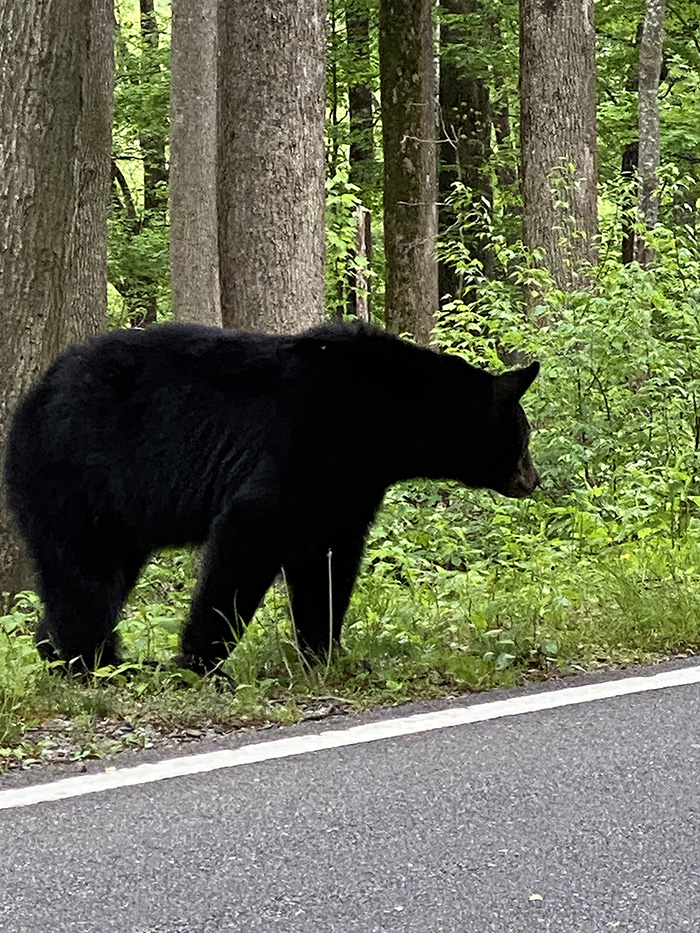 A black bear prepares to cross Newfound Gap Road in Great Smoky Mountains National Park. The image was taken from a distance with a zoom lens. Image by Jeaneane Payne |
You can increase your chances of seeing wildlife in these ways . . .
• carry binoculars
• drive slowly along park roads at dawn or dusk
• when walking or driving, stop often to watch and listen for wildlife
Most visitors understand that feeding wildlife is against the law, but many people do not realize that disturbing park wildlife is also a violation of federal regulations and can result in fines and arrest.
The laws protecting park wildlife are contained in the Code of Federal Regulations. It states that “Willfully approaching within 50 yards (150 feet), or any distance that disturbs or displaces bear or elk is prohibited." In addition, feeding, touching, teasing, frightening, or intentionally disturbing wildlife is prohibited.
As a rule of thumb, if you approach an animal so closely that it changes its behavior, you have approached too closely. Instead use binoculars, spotting scopes and cameras with telephoto lenses to enjoy wildlife. Watch for any modification in an animal's behavior that indicates that you have approached too closely. Move away from the animal until you reach a distance at which the animal feels comfortable once again and resumes whatever activity it was engaged in before you approached.
Never feed wildlife or bait animals for closer observation or photography. Feeding park wildlife usually guarantees its demise.
| Trip Ideas Great Smoky Mountains Facts Institute at Tremont Transportation & Airports Local News Photo Tours • Fall Photo Tour • Roaring Fork Motor Nature Trail • Smoky Mountain Fall Foliage • Fall Foliage at Kuhowi • Fall Colors in nearby towns • Fall in Wears Valley • Best Fall Hikes |
WHAT TO DO Attractions Biking Fishing Hiking Outdoor Adventure Scenic Drives Shopping Heritage, History, & Culture Nature Activities 4 SEASONS Winter Spring Summer Fall WEDDINGS Wedding Services Honeymoon Cabins |
WHERE TO EAT Restaurants Farmers' Markets Recipe Cards Surrounding Towns: • Cherokee • Gatlinburg • Pigeon Forge • Townsend • Wears Valley CONTACT |
||
